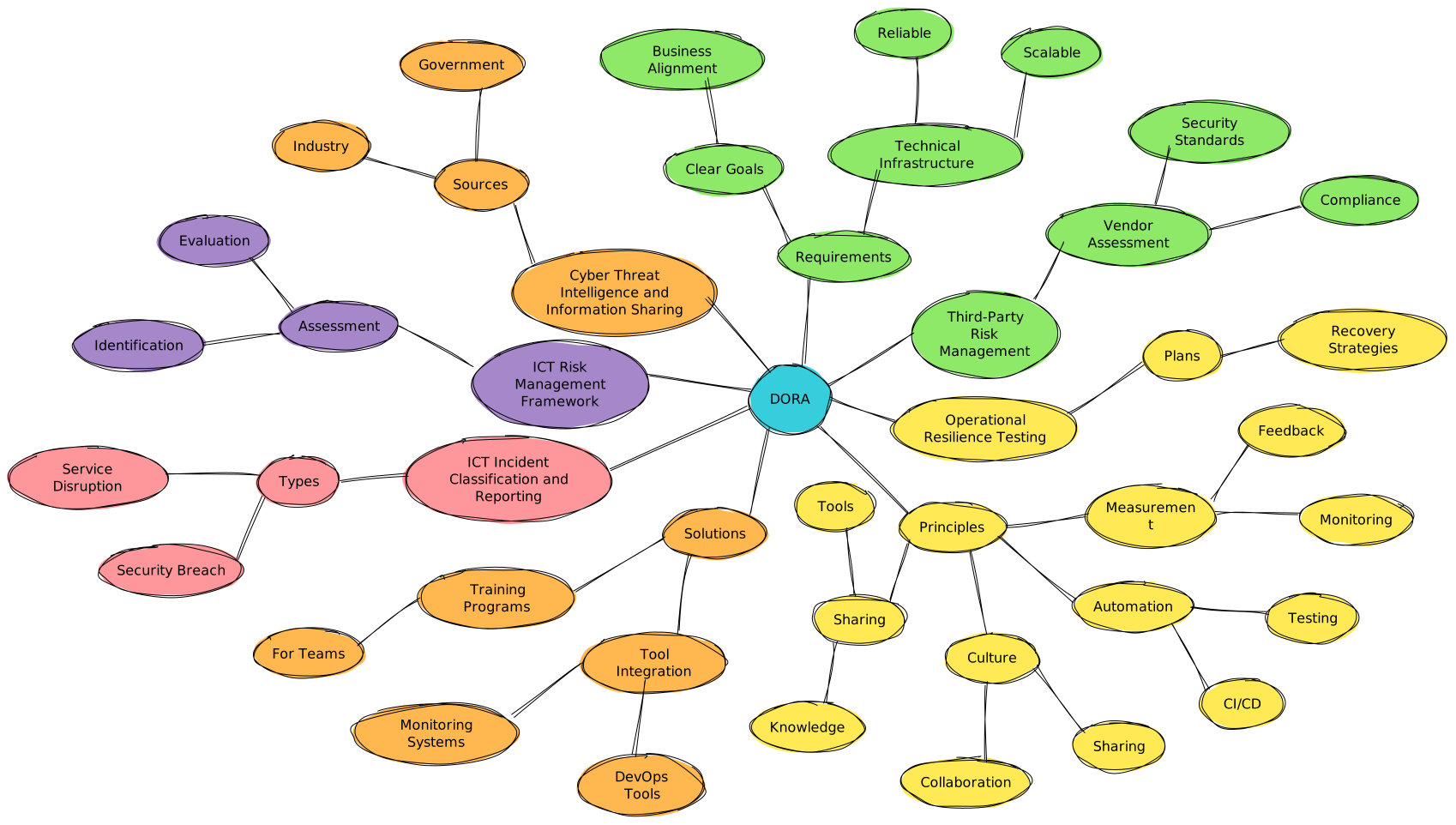
Preparing for DORA compliance requires a systematic approach. This comprehensive checklist covers all key requirements across the five pillars of DORA regulation.
DORA Compliance Checklist Overview
Before beginning implementation, ensure your organization has:
- Executive sponsorship and board awareness
- Dedicated compliance team or project lead
- Budget allocation for technology and consulting
- Timeline and milestones established
- Regular reporting mechanism to leadership
Pillar 1: ICT Risk Management
Governance & Strategy
- ☐ Define ICT risk appetite and tolerance levels
- ☐ Establish ICT risk management framework
- ☐ Assign Chief Information Security Officer (CISO) responsibility
- ☐ Create ICT risk policies and procedures
- ☐ Document ICT risk governance structure
Risk Assessment & Identification
- ☐ Inventory all critical ICT assets and systems
- ☐ Map system dependencies and interconnections
- ☐ Identify single points of failure
- ☐ Document critical business processes
- ☐ Conduct baseline vulnerability assessment
- ☐ Classify data by sensitivity level
Risk Protection & Mitigation
- ☐ Implement encryption for data at rest and in transit
- ☐ Deploy multi-factor authentication (MFA)
- ☐ Establish access control policies
- ☐ Implement intrusion detection systems
- ☐ Deploy endpoint protection solutions
- ☐ Establish privileged access management (PAM)
- ☐ Implement security monitoring and logging
Pillar 2: Incident Management
- ☐ Develop incident classification framework
- ☐ Define incident reporting procedures
- ☐ Create incident response playbooks
- ☐ Establish alert mechanisms
- ☐ Train incident response team
- ☐ Conduct incident response drills quarterly
- ☐ Document all incidents and near-misses
- ☐ Establish communication protocols for incidents
- ☐ Set up regulatory notification procedures
Pillar 3: Digital Operational Resilience Testing
Threat-Led Penetration Testing (TLPT)
- ☐ Select qualified TLPT provider
- ☐ Define scope and scenarios
- ☐ Conduct annual TLPT assessments
- ☐ Document findings and remediation
- ☐ Test incident response procedures
Advanced Security Testing
- ☐ Perform vulnerability scanning (monthly minimum)
- ☐ Conduct security code reviews
- ☐ Execute penetration testing
- ☐ Perform configuration reviews
- ☐ Document testing results
Backup and Recovery Testing
- ☐ Test backup integrity quarterly
- ☐ Conduct recovery time objective (RTO) tests
- ☐ Verify recovery point objective (RPO) compliance
- ☐ Test restoration of critical systems
- ☐ Document results and improvements
Pillar 4: Third-Party Risk Management
- ☐ Inventory all critical ICT service providers
- ☐ Assess third-party criticality rating
- ☐ Due diligence before contracting
- ☐ Include DORA clauses in all ICT contracts
- ☐ Establish service level agreements (SLAs)
- ☐ Right to audit vendor compliance
- ☐ Plan exit strategies for critical vendors
- ☐ Monitor concentration risk
- ☐ Quarterly vendor compliance reviews
- ☐ Test exit procedures annually
Pillar 5: Information Sharing
- ☐ Identify relevant information sharing entities
- ☐ Join ISAC (Information Sharing and Analysis Center)
- ☐ Establish information sharing protocols
- ☐ Share threat intelligence appropriately
- ☐ Participate in information sharing meetings
Documentation & Record Keeping
- ☐ Maintain audit trails for all ICT changes
- ☐ Document all risk assessments
- ☐ Keep testing reports and results
- ☐ Archive incident reports
- ☐ Store vendor assessment results
- ☐ Maintain ICT risk register
- ☐ Document training and awareness programs
Compliance Timeline
- ☐ Q4 2024: Complete gap analysis and remediation planning
- ☐ January 2025: Full compliance required
- ☐ Ongoing: Continuous monitoring and improvement
- ☐ Q3 2025: First assessment period begins
Implementation Tips
- Prioritize: Focus on high-impact items first
- Automate: Use tools to streamline compliance tracking
- Collaborate: Involve all relevant departments
- Document: Maintain clear records of all decisions and actions
- Train: Ensure staff understands DORA requirements
- Review: Regularly assess progress against timeline
Common Mistakes to Avoid
- ❌ Waiting until last minute to begin
- ❌ Treating DORA as IT-only responsibility
- ❌ Ignoring third-party risk management
- ❌ Insufficient documentation
- ❌ One-time compliance vs. continuous improvement
- ❌ Inadequate budget allocation