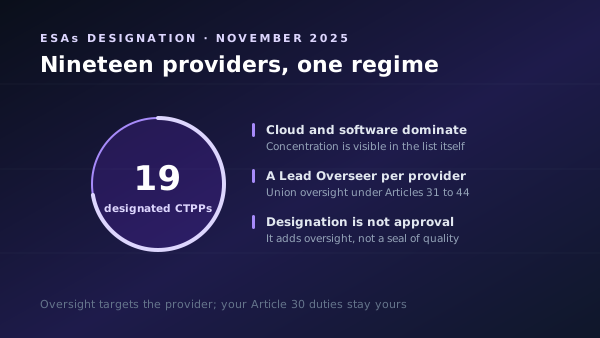
In a landmark development for DORA compliance, the European Supervisory Authorities (ESAs) have published the first official list of Critical ICT Third-Party Service Providers (CTPPs) on November 18, 2025. This designation marks a major milestone in operationalizing DORA's third-party risk regime.
Key Takeaway
CTPPs are now subject to direct EU-level oversight by the ESAs. Financial institutions using these providers must ensure their contracts and risk management processes are fully aligned with DORA requirements.
What Are Critical Third-Party Providers (CTPPs)?
Under DORA, CTPPs are ICT service providers whose failure or disruption could pose systemic risk to the financial sector. The ESAs designation brings these providers within a new, EU-level system of direct oversight.
Criteria for CTPP Designation
The ESAs designated providers based on several factors:
- Systemic importance: The potential impact on financial stability if services are disrupted
- Substitutability: How easily services can be replaced by alternatives
- Number of financial entities served: The breadth of the provider's client base in the EU financial sector
- Interconnectedness: Dependencies between the provider and critical financial infrastructure
Who Made the List?
The ESAs explain that the designated CTPPs deliver a range of ICT services - from core infrastructure to business and data services - to financial entities of all types and sizes across the EU.
Notable Designations
Amazon Web Services (AWS) has been officially designated as a Critical Third-Party Provider. According to AWS's official statement, they will now participate in a formal oversight process designed to promote a deeper understanding of how cloud technologies enhance the resilience of the financial services industry.
Other major cloud providers and critical ICT service providers have also been designated, covering:
- Cloud infrastructure providers
- Core banking platform vendors
- Payment processing services
- Data analytics and business intelligence platforms
- Cybersecurity service providers
What Does CTPP Designation Mean?
For the Designated Providers
CTPPs are now subject to direct ESA oversight, which includes:
- Regulatory examinations: Regular assessments of risk management and governance frameworks
- On-site inspections: Physical audits of operations and security controls
- Information requests: Mandatory reporting to supervisory authorities
- Recommendations and penalties: ESAs can issue binding recommendations and impose sanctions
For Financial Institutions
If your organization uses a designated CTPP, you must:
- Review existing contracts: Ensure all DORA-required clauses are in place
- Update risk assessments: Document the criticality of CTPP services
- Strengthen monitoring: Implement continuous oversight of CTPP performance
- Prepare exit strategies: Maintain documented and tested exit plans
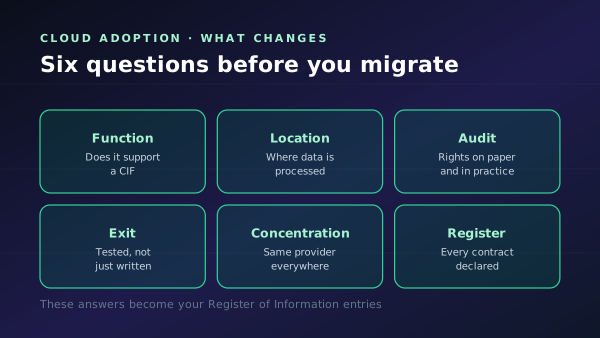
- Report to authorities: Include CTPP relationships in your Register of Information
The ESA Oversight Framework
This designation follows the ESAs' publication of their supervisory approach in the July 2025 guide on CTPP oversight. The framework establishes:
Risk Assessment Process
The ESAs will assess whether CTPPs have appropriate:
- Risk management frameworks
- Governance structures
- Business continuity plans
- Incident response capabilities
- Security controls and testing programs
Ongoing Supervision
The oversight regime includes:
- Annual risk assessments
- Regular dialogue with CTPP management
- Coordination with national competent authorities
- Information sharing across the EU
Timeline and Key Dates
| Date | Milestone |
|---|---|
| January 17, 2025 | DORA enters into full application |
| April 30, 2025 | Deadline for national authorities to submit Registers of Information to ESAs |
| July 2025 | ESAs publish CTPP oversight guide |
| November 18, 2025 | First list of designated CTPPs published |
| 2026 onwards | Active CTPP oversight and examinations begin |
Impact on Financial Institutions
Immediate Actions Required
- Identify CTPP relationships: Review your ICT provider inventory against the published list
- Contract compliance check: Verify DORA-compliant clauses are in all CTPP agreements
- Risk assessment update: Reassess concentration risk and dependencies
- Board reporting: Inform management body of CTPP designations affecting your institution
- Register of Information: Update your regulatory submissions to reflect CTPP status
Strategic Considerations
Financial institutions should consider:
- Multi-cloud strategies: Reducing concentration risk by diversifying providers
- Exit planning: Developing robust transition capabilities
- Contract negotiations: Leveraging CTPP status in service level discussions
- Collaboration: Working with CTPPs on compliance documentation
What This Means for Cloud Adoption
The CTPP designation should not be viewed as a barrier to cloud adoption. In fact, AWS has stated that they view the designation as an opportunity to demonstrate how cloud technologies enhance - rather than threaten - operational resilience.
Benefits of Using Designated CTPPs
- Regulatory clarity: Clear oversight framework reduces compliance uncertainty
- Enhanced security: CTPPs must meet stringent ESA requirements
- Industry standards: Designated providers set benchmarks for ICT service delivery
- Audit efficiency: ESA oversight may reduce individual audit burden
Penalties for Non-Compliance
Organizations failing to properly manage CTPP relationships face significant consequences:
- Financial penalties: ceiling set by your national supervisor (Art. 50). DORA fixes no EU-wide amount
- Individual liability: Article 50(5) extends penalties to the management body and other responsible individuals, at amounts set by national law
- Operational restrictions: Regulators may impose business limitations
- Reputational damage: Public disclosure of compliance failures
Next Steps for Your Organization
To ensure compliance with DORA's CTPP requirements:
- Download the ESA list: Review the full list of designated CTPPs on the ESA website
- Conduct impact assessment: Identify which CTPPs you rely on
- Review contracts: Ensure DORA-compliant clauses are in place
- Update risk frameworks: Integrate CTPP oversight into your ICT risk management
- Engage with providers: Coordinate compliance efforts with your CTPPs
- Document everything: Maintain comprehensive records for regulatory review
Need Help?
Our team can help you navigate CTPP compliance requirements. Contact us for a free consultation or download our DORA Compliance Checklist to get started.