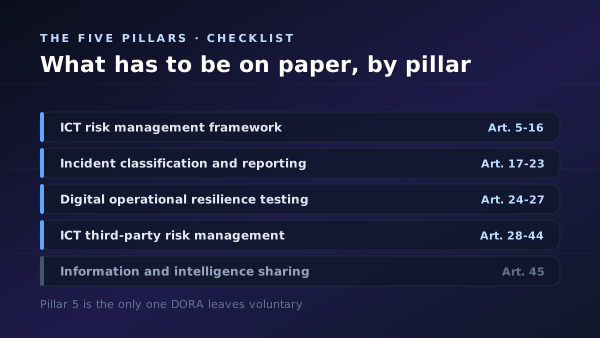
DORA asks for ICT risk management, security testing and change control across the lifecycle of your systems. The most efficient way to deliver that is not a separate compliance process bolted on at the end: it is a secure software development lifecycle (DevSecOps) that builds the controls, testing and evidence into the pipeline that already ships your software.
Where DORA meets the SDLC
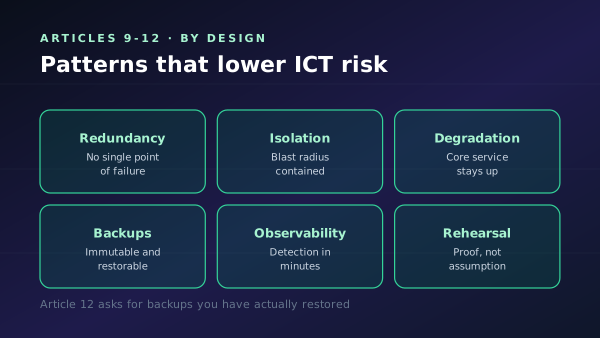
DORA’s protection and testing requirements (Articles 9 and 24–25), and ISO 27001’s secure-development controls (A.8.25–A.8.29), map almost one-to-one onto good engineering practice. If your pipeline already does these, much of the work is evidencing what you do.
- Shift security left. Threat modelling and secure-design review for changes to critical-function systems.
- Automated testing in CI. Static analysis (SAST), dependency/SBOM scanning, secrets detection and security tests on every build.
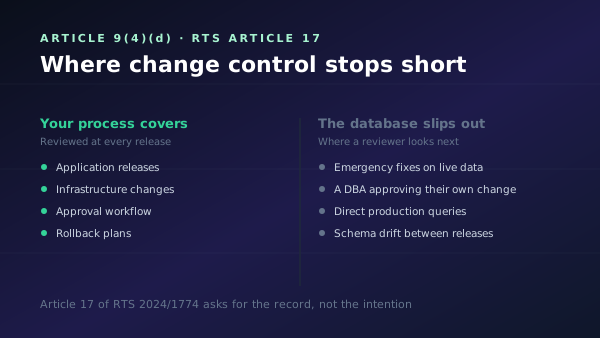
- Controlled change. Code review, separation of duties, approval gates and a full audit trail of who changed what, when: the evidence supervisors want.
- Secure deployment. Immutable, repeatable deployments with rollback, which also serve recovery (Art. 11–12).
- Test environments and data. Realistic but protected, so resilience testing does not create new risk.
Reuse your ISMS
If you hold ISO 27001, the secure-development Annex A controls already cover much of this: reuse that evidence for DORA rather than rebuilding it. Our ISO 27001 to DORA mapping guide and the DORA × ISO 27001 Lead Implementer certification show exactly how.
Go deeper
The ICT Risk Management Professional certification connects these engineering controls to the DORA risk framework. Browse the verifiable DORA certification catalogue, or start with the free foundation course.